
All posts by gadmin
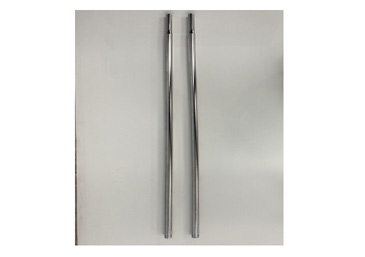
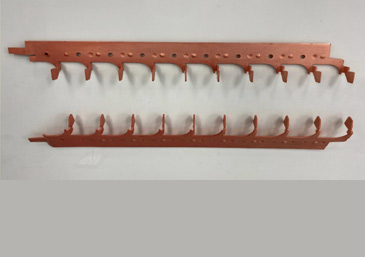
Copper Plating
Welcome to Groupe altech
Groupe Altech Inc
Groupe Altech, one of the largest and most competitive metal surface treatment facilities in Montreal, Quebec, has been providing plating processes for customers in the automotive, aerospace, electronics, military and commercial industries for over 30 years. Groupe Altech works as an integral part of our clients’ production process. We are committed to providing finished parts that exceed our customers’ expectations in a rapid, responsive and cost-effective manner while ensuring that our business and environmental responsibilities are met. We maintain our strong commitment to research and development by continuously striving to develop new technologies in the plating industry. Groupe Altech houses custom plating lines designed for quick changes or for a variety of different parts simultaneously in a facility that is over 50, 000 Sq. Ft. We are always at your disposal to accommodate your needs, whether for large batches or a single prototype.… Groupe Altech has a fully equipped chemistry laboratory with all the necessary equipment needed in the plating field. In anticipation of changing customer needs and the development of new technologies, we are constantly examining and employing new processes.
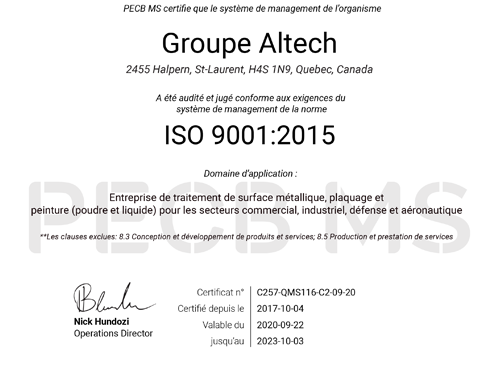
We are ISO 9001:2015 certified and provide ROHS and REACH compliant in various processes.
We believe that every customer is an important and integral part of our success.

Powder and liquid Paint
Powder Paint:
The powder may be a thermoplastic or a thermoset polymer. It is usually used to create a hard finish that is tougher than conventional paint. Powder coating is mainly used for coating of metals. Powder coating works by applying dry colour powder to a metal surface, before ‘baking’ the colour onto the surface using heat to form a hard finish. The colour powder is applied electrostatically using a power gun. This gives the powder a positive charge, which is attracted to the ground metal surface.
Liquid Paint:
Liquid paint is a process of coating metal which is carried out using a spray gun. The coating is sprayed onto the metal surface in one or more layers, depending on the type of liquid paint used and the purpose of the coating (primer, finish, intermediate layer).
Powder and liquid paint is offered as per CAE (PPS) specifications or any other specifications as required by our Clients
Salt Spray Testing / Adhesion and Thickness Testing for plating
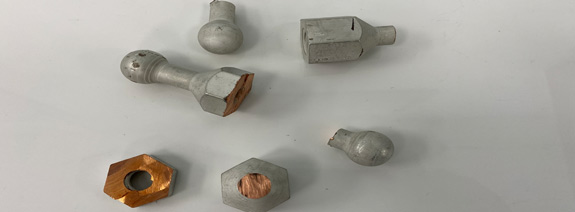
The Salt Spray Test is a standardized and popular corrosion test method used to verify corrosion resistance of materials and surface coatings. Usually, the materials to be tested are metallic and finished with a surface coating which is intended to provide a degree of corrosion protection to the underlying metal. This is done as per ASTM B 117.
Adhesion Testing is done for plating as required in ASTM B571. Various tests such as Bend test, File test, Burnish test, Heat quench test, Peel test/ Tape test are performed in order to verify the adhesion of plating.
The Coating Thickness is typically measured using the following:an X-ray spectrometer, Thickness gauges, and / or Micrometer.
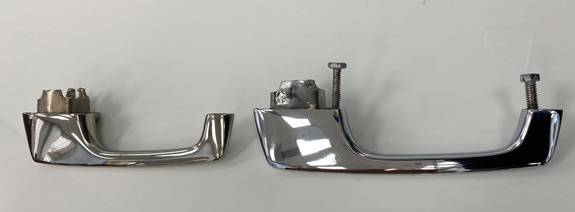
Sandblast / Glass-Bead /Brushing / Polishing / Masking / Baking
Sandblasting can remove paint, rust, and residue from oxidation from materials quickly and efficiently. Sandblasting can also be used to change the condition of a metal’s surface, such as through removing scratches or casting marks. Sandblasting, as a cleaning method, has been widely used for over a hundred years.
Glass beads are solid glass spheres. Due to their high strength, chemical stability, limited thermal expansion, and good flow ability, they are manufactured from colorless glass for several industry purposes and widely used for blasting in order to give rough metals a smooth finish.
A Brushed or polished surface of metal has a unidirectional satin finish . It is produced by polishing the metal with a grit belt or wheel, then softening it with a greaseless compound or a medium non-woven abrasive belt or pad. Commonly brushed metals include stainless steel, aluminum and nickel. Brushing gives metal a distinctive look as it retains some but not all of its metallic lustre and is given a pattern of very fine lines parallel to the brushing direction. For this reason, it is commonly used for decorative items. Masking is an option prior to any plating process. Post-plating baking consists of baking the part immediately after plating. This can reverse the effects of hydrogen embrittlement, in most cases. General guidelines call for baking the part for four hours at a temperature of 375º F within one hour of plating or as per our clients’ request.

Ultra Sonic Cleaning and Chemical Cleaning of Metals
Ultrasonic cleaning is a process that uses ultrasound (usually from 20–40 kHz) to agitate a fluid. The ultrasound can be used solely with water. However,the use of a solvent appropriate for the object to be cleaned and the type of soiling present enhances the effect. Strong acids, such as hydrochloric acid and sulfuric acid are common. Nonetheless, different applications use various other acids. Moreover, alkaline solutions can be used for cleaning metal surfaces. Solutions usually also contain additives such as wetting agents and corrosion inhibitors.
Alkaline cleaning agents contain strong bases such as sodium hydroxide or potassium hydroxide. Often, dispersants used to prevent re-deposition of dissolved dirt and chelants used to attack rust are added to the alkaline agent. Alkaline cleaners can dissolve fats (including grease), oils, and protein-based substances. Alkaline cleaners are specifically formulated chemical blends consisting of alkaline salts, wetting agents and sequestrant (chelating) agents. They owe their detergency, or cleaning ability, to the displacement of contaminants by surface-active materials and alkaline builders. These constituents remove the contaminants and allow them to be easily rinsed away.
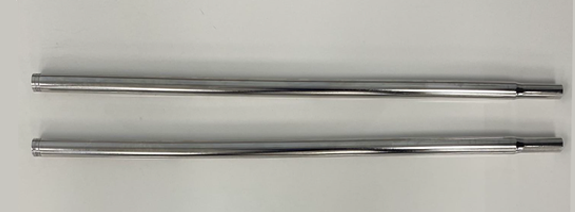
Electro – Polishing
Electro-polishing, also known as electrochemical polishing, anodic polishing, or electrolytic polishing (especially in the metallography field), is an electrochemical process that removes material from a metallic work-piece, reducing the surface roughness by levelling micro-peaks and valleys, improving the surface finish
Electro-polishing stainless steel is a “reverse plating” process that uses an electrochemical solution to remove the outer skin of a metal part. Electro-polishing stainless steel, especially 300 and 400 series stainless steel, significantly improves a part’s corrosion resistance, leaving it with a lasting bright finish.
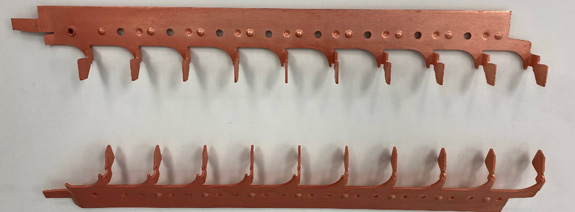
COPPER PLATING
Copper plating is the process of depositing a copper layer onto various metals for functional and decorative purposes. Copper can produce a dull, polished, semi bright, gloss or satin finish and is used to coat metals for purposes ranging from automotive to medical. Copper is a chemical element with a high thermal and electrical conductivity, and is antibacterial, tough, ductile and non-magnetic.
Specifications : MIL-C-14550B, ASTM B734, AMS 2418.
MIL-C-14550B(Electroplated Bright Copper)
| CLASS 0 | 0.001:-0.005″ |
| CLASS 1 | 0.001″MIN |
| CLASS 2 | 0.0005″MIN |
| CLASS 3 | 0.0002″MIN |
| CLASS 4 | 0.0001″MIN |
ASTM B 734
| CLASS 25 | 0.001″MIN |
| CLASS 20 | 0.0008″MIN |
| CLASS 12 | 0.0005″MIN |
| CLASS 5 | 0.0002″MIN |
| CLASS X | AS SPECIFIED |
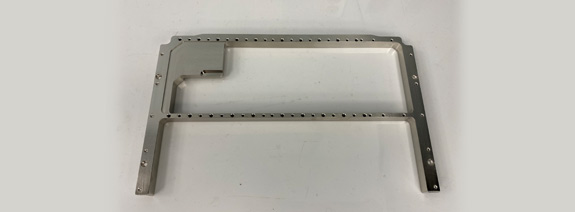
ELECTRO PLATED NICKEL
Nickel electroplating is a technique consisting of electroplating a thin layer of nickel onto a metal object. The nickel layer can be decorative, provide corrosion resistance, wear resistance, or used to build up worn or undersized parts for salvage purposes. A wide range of metals can be electrodeposited. The technology of nickel electroplating has been extensively developed, particularly through the last five decades, to make possible the efficient production of a broad range of industrial coatings for both decorative and functional applications. Electroplated nickel is commercially important with upwards of 150,000 tonnes deposited annually worldwide. This widespread use reflects the useful properties of nickel as a coating and its versatility. A feature of electroplating is that, by modifying the composition of the electrolyte and the operating conditions, the properties and appearance of nickel can be customised to meet specific needs. Specifications: QQ-N-290 revA, ASTM B 689.
QQ-N-290 REV A
| CLASS 1 | CORROSION PROTECTION |
| CLASS 2 | ENGINEERING USE |
| GRADE A | 0.0016″ |
| GRADE B | 0.0012″ |
| GRADE C | 0.001″ |
| GRADE D | 0.0008″ |
| GRADE E | 0.0006″ |
| GRADE F | 0.0004″ |
| GRADE G | 0.0002″ |